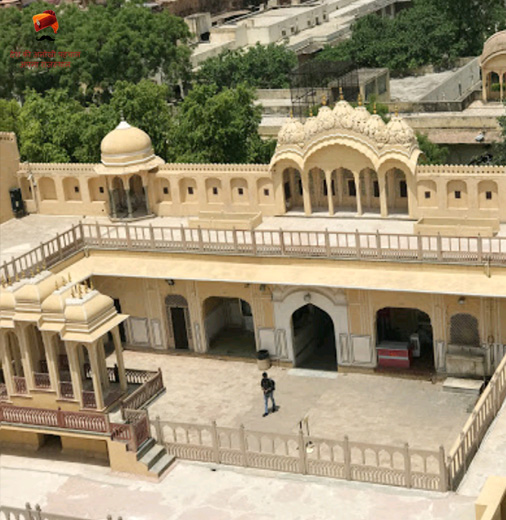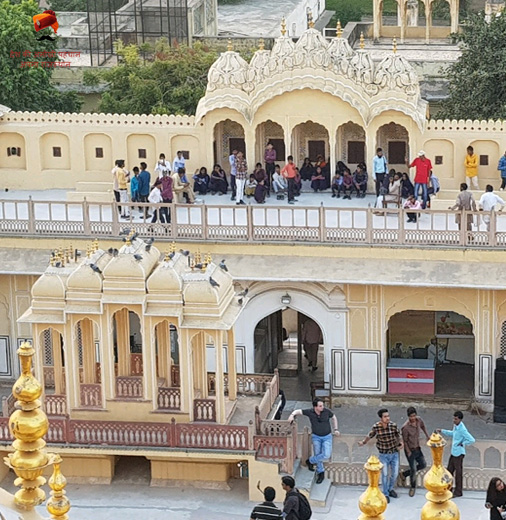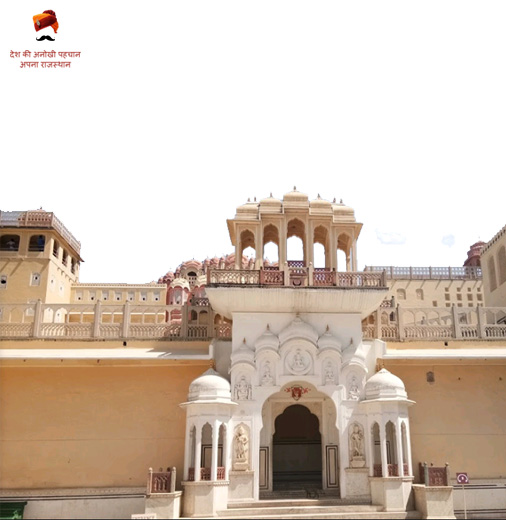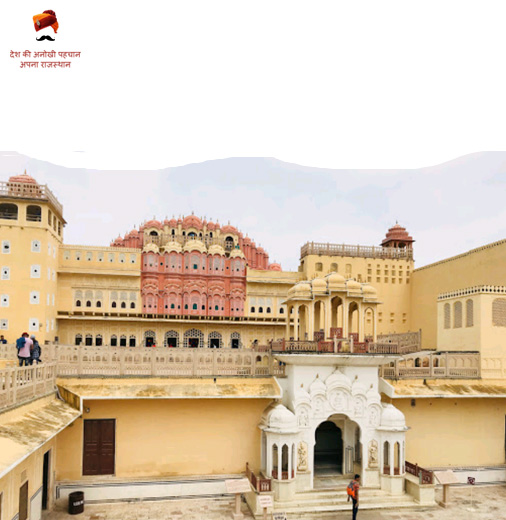

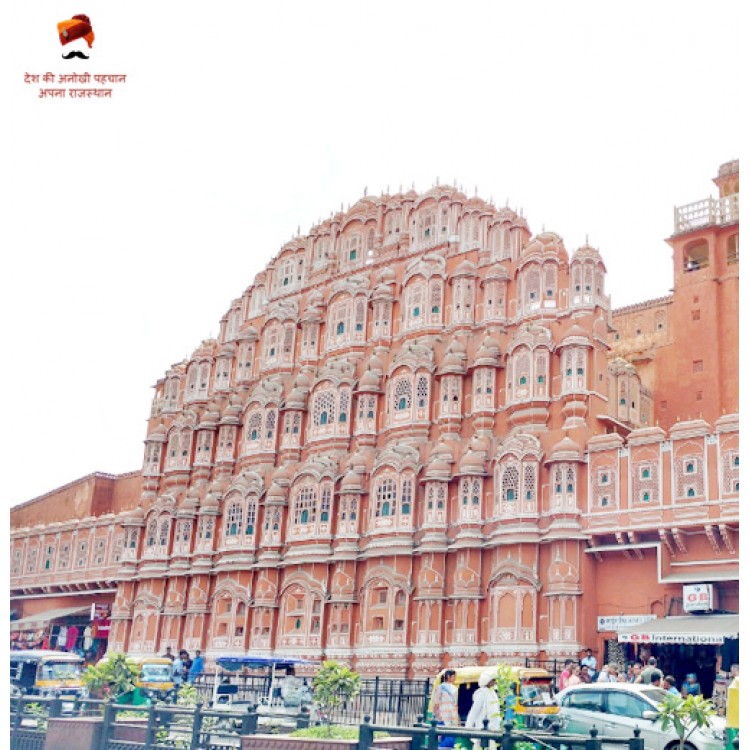
Hawa Mahal is a palace in Jaipur, India. It is constructed of red and pink sandstone. The palace sits on the edge of the City Palace, Jaipur, and extends to the zenana, or women's chambers. The structure was built in 1799 by Maharaja Sawai Pratap Sin
Hawa Mahal is a palace in Jaipur, India. It is constructed of red and pink sandstone. The palace sits on the edge of the City Palace, Jaipur, and extends to the zenana, or women's chambers. The structure was built in 1799 by Maharaja Sawai Pratap Singh.
Address : Hawa Mahal Rd, Badi Choupad, J.D.A. Market, Pink City, Jaipur, Rajasthan 302002
Height : 49′
Opened : 1799
Floor : 5
Architectural : Mughal architecture
Architects : Pratap Singh of jaipur, Lal Chand Ustad
What if I told you that one of the most famous buildings in the world wasn't really a building at all? That it was, in fact, an illusion? A magnificent, five-story screen, built not just for beauty, but for a secret.
Today, I invite you on a journey to the heart of Jaipur, to uncover the secrets of the incredible Hawa Mahal—the Palace of Winds.
Close your eyes for a moment and picture it… a towering structure of red and pink sandstone, shaped not like a fortress or a palace, but like the crown of the Hindu god, Krishna. Now, open your eyes to its reality. This is the Hawa Mahal, commissioned in 1799 by the devout Maharaja Sawai Pratap Singh and brought to life by the visionary architect, Lal Chand Ustad.
But why? Why was this beautiful facade built?
Its purpose is as elegant as its design. In an era of strict royal traditions, the women of the court lived in seclusion, behind the veil of purdah. They could not be seen in public. Yet, they were curious; they were human. They longed to be part of the city's vibrant life—to see the colorful festivals, the bustling markets, the grand processions passing by.
The Hawa Mahal was their window to the world.
Look closely at its façade. You will see it’s not a solid wall, but a honeycomb of 953 windows. Each one is a jharokha—an intricately carved, latticed window. From the inside, the royal ladies could look out, their view perfectly clear. But from the outside, looking in? The latticework was a shield, protecting their privacy completely. It was a masterpiece of social engineering.
But the genius doesn't stop there. The name "Palace of Winds" isn't just poetic; it's scientific. Those 953 windows are part of a natural air-conditioning system. As the hot desert winds of Rajasthan blow against the palace, they are funneled through these tiny openings, creating a cooling Venture effect. The entire building becomes a wind catcher, ensuring that even in the peak of summer, the interiors remained cool and breezy. It was, truly, a palace of winds.
And let's talk about climbing it. You won't find grand staircases here. Instead, the floors are connected by gentle ramps. Why? So that the royal women, carried in palanquins, could glide effortlessly from one floor to the next, from the Sharad Mandir to the dazzling Ratan Mandir with its brilliant glasswork, all the way up to the open terrace—the Hawa Mandir—where the city of Jaipur spreads out before you.
So, the next time you see a picture of the Hawa Mahal, remember this: you are not just looking at a beautiful monument. You are looking at an act of empathy. A symbol of freedom within tradition. A building that is both an artistic statement and a scientific marvel.
It is a testament to a time when architecture wasn't just about creating space, but about enhancing life itself. It is the proud, pink, beating heart of Jaipur.