
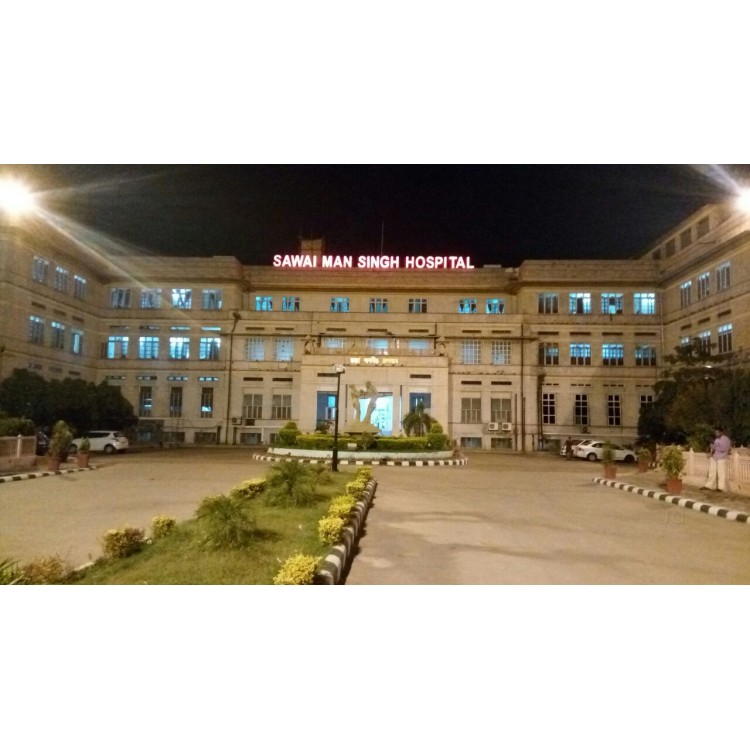
Sawai Man Singh (S.M.S) Hospital is one of the largest and most prestigious government-run hospitals in not just Rajasthan, but in all of Northern India. Located in the heart of Jaipur, it serves as a primary tertiary care referral center for th
Sawai Man Singh (S.M.S) Hospital is one of the largest and most prestigious government-run hospitals in not just Rajasthan, but in all of Northern India. Located in the heart of Jaipur, it serves as a primary tertiary care referral center for the entire state and is a cornerstone of medical education and healthcare for millions.
Founder: The hospital is named after Maharaja Sawai Man Singh II, the last ruling Maharaja of the princely state of Jaipur.
Establishment: It was inaugurated in 1943.
Legacy: It was established as a state-of-the-art facility to provide modern medical care to the public, continuing the legacy of progressive development initiated by the Jaipur royals.
S.M.S. Hospital is much more than just a hospital; it's an institution with multiple critical roles:
Tertiary Healthcare Hub: It provides advanced medical and surgical care that is not available at smaller district or private hospitals. This includes complex surgeries, specialized cancer treatment, advanced cardiac care, and neurosurgery.
Teaching Hospital: It is the primary teaching hospital attached to the Sawai Man Singh Medical College (SMSMC), one of the oldest and most renowned medical colleges in India. Medical students, interns, and resident doctors receive their practical training here.
Public Health Mission: As a government hospital, its primary mandate is to provide affordable, and often free, healthcare to a vast section of the population, especially the underprivileged.
Referral Center: Patients are referred to S.M.S. from all district hospitals across Rajasthan for specialized treatment.
S.M.S. Hospital is a multi-specialty institution with a wide range of departments. Some of its most prominent and advanced centers include:
Cardiology and Cardiothoracic Surgery: Renowned for its heart surgeries, including bypass and valve replacements.
Neurology and Neurosurgery: Handles complex brain and spinal cord surgeries.
Oncology (Cancer): The Regional Cancer Centre (RCC) at S.M.S. is a premier facility for cancer diagnosis, chemotherapy, and radiation therapy.
Gastroenterology and Hepatobiliary Surgery: Specializes in liver, pancreas, and digestive system disorders.
Nephrology and Urology: Offers dialysis and kidney transplants.
Traumatology & Emergency Medicine: Has a dedicated and busy trauma center that handles emergencies 24/7.
Orthopedics: Known for joint replacements and complex fracture management.
Pediatrics: Includes a advanced Neonatal ICU (NICU) for critically ill newborns.
Other Major Departments: Ophthalmology, ENT, Dermatology, Psychiatry, Pulmonary Medicine, and more.
The hospital complex is massive and continuously evolving.
Main Building: The historic central building houses many of the core departments.
New Multi-Story Building: A modern, high-rise block has been added to accommodate more patients and house super-specialty departments with better amenities.
Trauma Center: A dedicated, well-equipped facility for emergency cases.
Diagnostic Facilities: Houses advanced imaging technology like CT Scanners, MRI, and Digital X-Rays.
Blood Bank: A 24x7 reliable blood bank is operational on the campus.
Pharmacy: A large in-house pharmacy provides medicines at subsidized rates.
High Patient Load: Being a premier government hospital, it is almost always extremely crowded. Long waiting times for OPD (Outpatient Department) consultations and diagnostic tests are common.
Affordable Care: The cost of treatment is significantly lower than in private hospitals, making it accessible to all economic strata.
Process: The system can be complex for a new visitor. It typically involves:
Getting an OPD card.
Waiting for a consultation.
Getting investigations done.
Follow-up with the doctor for admission or treatment plan.
Blend of Old and New: You will see the historic architecture alongside modern medical equipment, representing its long-standing legacy and ongoing modernization.
Sawai Man Singh Medical College (SMSMC)
The college is intrinsically linked to the hospital. It offers undergraduate (MBBS), postgraduate (MD/MS), and super-specialty (DM/MCh) degrees.
The faculty of the medical college are the senior doctors and consultants at the hospital, ensuring that patients are treated by highly qualified and experienced medical professionals.
Location: S.M.S. Hospital Road, Near Ajmeri Gate, Jaipur, Rajasthan.
Accessibility: It is centrally located and well-connected by road.
Metro: The nearest metro station is Sindhi Camp, which is a short auto-rickshaw ride away.
Bus: Numerous city buses stop at or near the hospital.
Parking: Finding parking can be very challenging due to the central location and high footfall.